


Powered wheelchair users
Go out with peace of mind, knowing the chair won’t let you down.
- Warns you before the battery runs out
- The chair located, even when parked
- Built-in SOS button
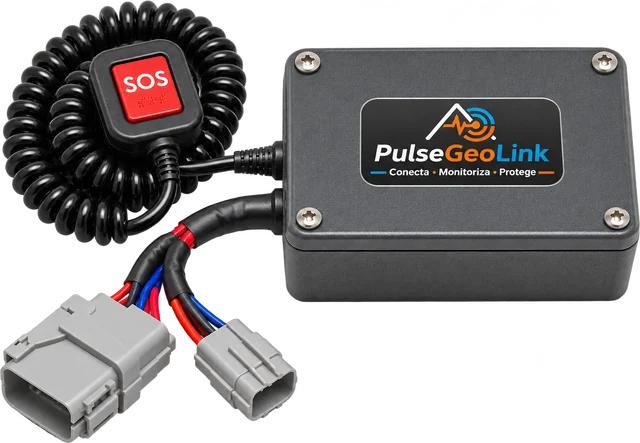
Pulse GeoLink connects the powered wheelchair to a platform that locates, monitors and protects it: the real battery level, the motors, the tilt and where the chair is. And it warns you before anything fails.
 From our blog (in Spanish)
Accesibilidad en entornos urbanos
But a battery that runs out far from home or a motor that fails without warning turns it into a problem. Pulse GeoLink makes the chair warn you first.
people in Spain have significant mobility difficulties.
INE, EDAD 2020children aged 6 to 15 live with a disability in Spain. Growing up also means gaining independence.
INE, EDAD 2020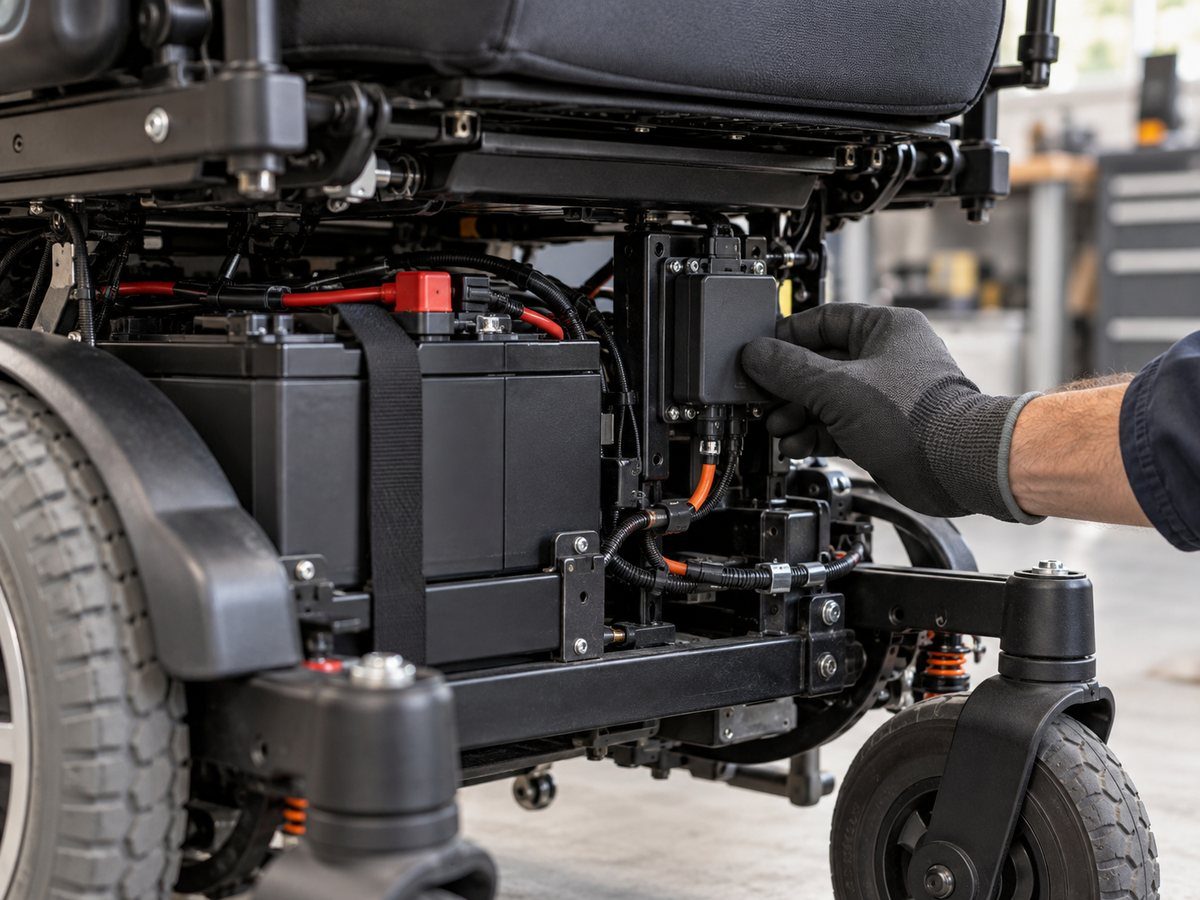
It is fitted next to the chair’s batteries and monitors it day and night. There is nothing to carry or wear.
The level comes from the actual voltage of the chair’s batteries. It knows when it is charging and warns you before it runs out.
Temperature probes detect when a motor is running hotter than normal.
Forwards, backwards and sideways, separately, with the limit you choose. The chair only needs calibrating once, on level ground.
Where the chair is, even when nobody is using it, and a history of its routes.
The nearest workshop, the appointment in the calendar and the history of every repair.
On the chair itself, always within reach, in case you need to call for help with your location.
Does your manual wheelchair have Explorer One? Pulse GeoLink can be fitted to it too, so your converted chair is connected as well.
 From our blog (in Spanish)
Tecnología para personas con discapacidad: más allá de la movilidad
Pulse GeoLink streams the chair’s data continuously. The platform uses it to spot possible faults and estimate when batteries or motors will need replacing. Pick a status and see what changes.
Everything is within normal limits. The platform keeps measuring, day and night.
Something is starting to drift from normal: a battery losing capacity or a motor running hotter than it should. Time to book a service.
In this example, the battery has lost capacity and a motor is at 58 °C. The platform suggests the nearest workshop.
Act now: the battery is running out or the chair has gone past its tilt limit.
In this example, the battery is down to 8% and the chair has tilted 14°, beyond the chosen limit. The alert arrives straight away, with the location.
How the alert arrives
For someone with one chair, or for a care centre, mobility shop or workshop with dozens. Each with its status, its battery and its latest alert.
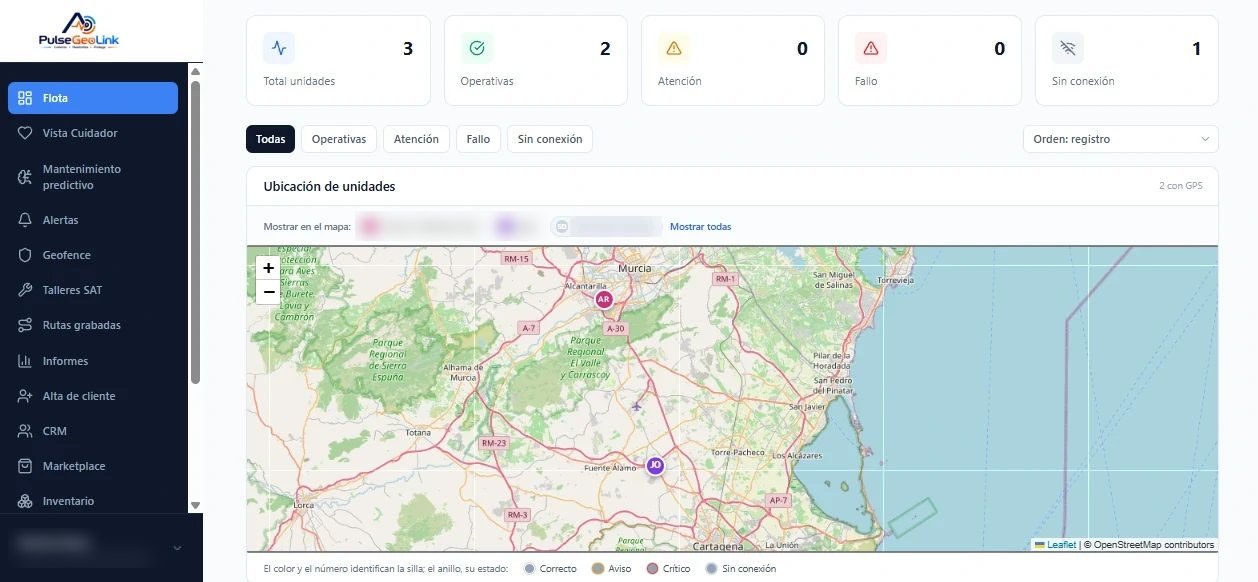
Working, needs attention, fault or offline. Tap it to see why.
Predictive maintenance, workshops, appointments and the history of every repair.
Recorded routes and usage and fault reports for each chair.
Tested on small screens, which is where people check it.
A tracker tells you where the chair is. Pulse GeoLink also knows how it is and warns you before it fails.
| Feature | Pulse GeoLink | Generic tracker |
|---|---|---|
| Chair location, even when parked | Yes | Yes |
| Battery measured at the chair’s own batteries | Yes | Not included |
| Tilt and tip-over risk | Yes | Not included |
| Motor temperature | Yes | Not included |
| Predictive maintenance, workshops and appointments | Yes | Not included |
| Route and repair history | Yes | Depends on the model |
| SOS button built into the chair | Yes | Depends on the model |
| Fleet management for care centres and mobility shops | Yes | Not included |
 From our blog (in Spanish)
Apps móviles para personas con discapacidad motora
The module sits next to the chair’s batteries, with the SOS button built in. The chair only needs calibrating once, on level ground.
The platform receives battery, motor, tilt and position data and compares it with each chair’s limits. Day and night.
To the user, the centre or the workshop, on screen, by email, push notification or WhatsApp. And with no signal, the module stores the data and sends it once it reconnects, each reading with its real time.
 From our blog (in Spanish)
Mejores prácticas de accesibilidad en el transporte público y privado: Un paso hacia la inclusión
Go out with peace of mind, knowing the chair won’t let you down.
Every chair in the centre, ready to go and on the same map.
A service team that gets ahead of breakdowns.
Where the chair is says where a person is. That’s why it is protected as the General Data Protection Regulation (GDPR) requires.
Location and chair history is deleted automatically after 13 months.
Every person needs permission. Without it, the location isn’t even sent.
Always over HTTPS. Download your data or ask for your account to be deleted whenever you like.
Another question? Write to us.
A module connected to the chair’s batteries, with the SOS button built in. After that, the chair only needs calibrating once, on level ground.
The platform tracks the battery voltage and, with temperature probes, how hot the motors get. If a battery loses capacity or a motor runs hotter than normal, it alerts you to have it checked before it fails and suggests the nearest workshop.
It monitors the tilt —forwards, backwards and sideways, separately— and the tip-over risk, with the limit you choose. If the limit is exceeded, it alerts you.
Nothing is lost. The module stores the readings and sends them as soon as it reconnects, each with the time it happened.
Yes. All the chairs on the same map, each with its status, its maintenance and its repair history.
It’s not required. There is an optional mobile app for those who prefer it. And if you’d rather not install anything, Pulse GeoLink works just the same in your phone or computer browser.
We'll explain how it works and whether it suits the person you care for or your centre. No obligation.